Kim Young | International Development Consultant

Amplifying Global Voices for Transformation and Impact.

Working where policy, practice and justice intersect.

About Kim Young Work With Me

Development Rooted in Reality

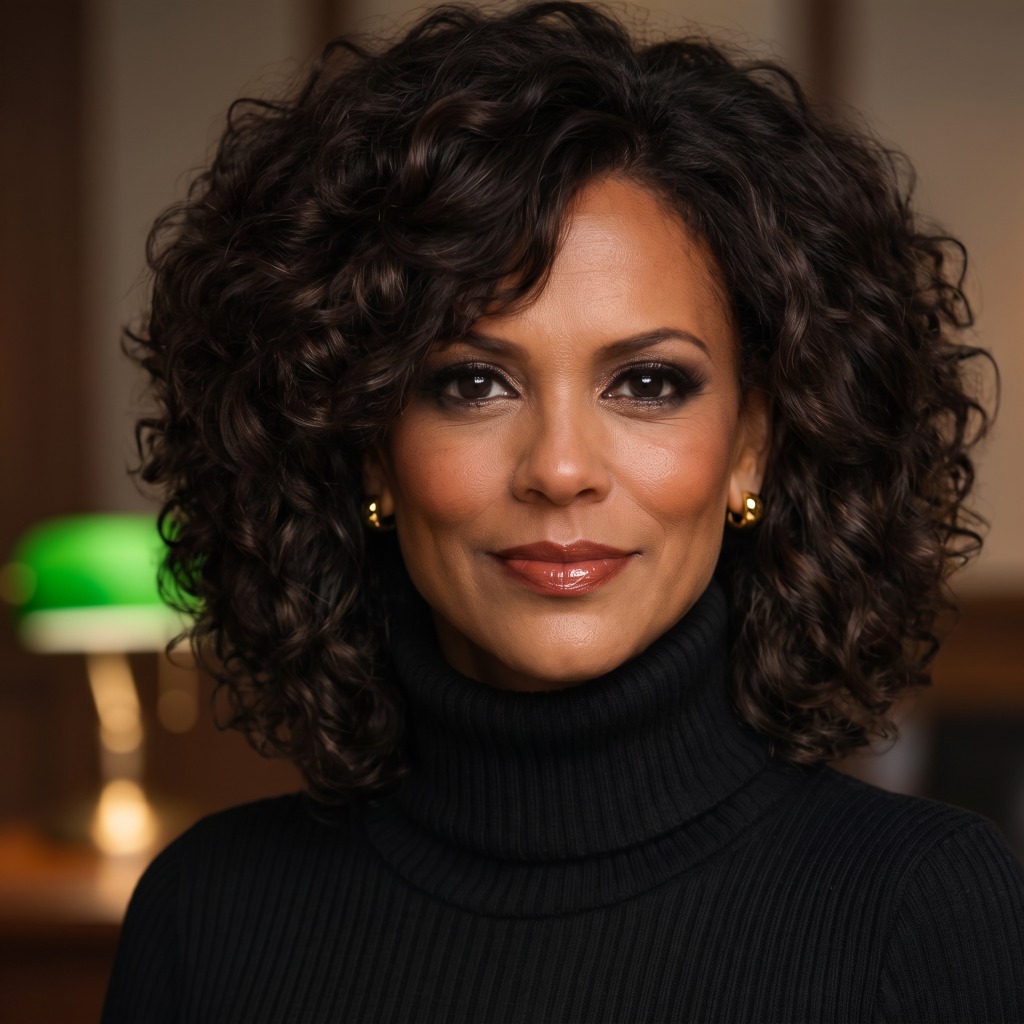
Kim Young portrait

Global development justice matters now more than ever because the world is confronting overlapping crises that expose the structural inequities embedded in our global systems—climate vulnerability, uneven access to health and education, extractive economic models, and the persistent legacies of colonial rule. These challenges are not abstract. They shape who thrives, who struggles, and whose knowledge is valued or dismissed. At the same time, communities across the Global South continue to demonstrate extraordinary resilience, creativity, and leadership. This moment demands a development paradigm that is not only sustainable, but fundamentally just.

Central to this shift is the urgent task of deconstructing colonialism in development practice. Development cannot be transformative if it reproduces the hierarchies, assumptions, and power imbalances inherited from empire. This is not merely an academic concern—it is deeply personal. Kim Young has long rejected the expectation, immortalised by Barbadian writer Austin “Tom” Clarke, that one should “grow up stupid under the Union Jack.” Her generational story—shaped by her parents’ experiences in London just two decades after the Windrush Generation—compelled her to interrogate her own “British-ness,” her birthplace in London, and her rootedness in Barbados and the wider Global South. These lived realities inform her conviction that development justice must dismantle inherited colonial frames and elevate the voices, histories, and epistemologies of the South.

Within this context, the Sustainable Development Goals (SDGs) and Agenda 2030 remain the most ambitious global blueprint for a fairer world. They call for a model of development that centres dignity, equity, climate responsibility, and shared prosperity. Yet their success depends on applying a justice-centred lens—one that recognises historical imbalances, demands fair financing, and insists that development be co-created with communities rather than imposed upon them. Agenda 2030 is not simply a policy framework; it is a moral commitment to reimagining global systems so that they serve all people, not just the historically privileged.

For more than 25 years, Kim Young has devoted her career to advancing development justice across multiple sectors in the Global South—working with governments, civil society, academic institutions, and international organisations to strengthen systems, elevate marginalised voices, and champion equity-driven approaches to development. Her work is grounded in the belief that sustainable progress is only possible when justice, history, and lived experience are placed at the centre of every decision. Kim looks forward to working with you as we continue building a world where development is fair, inclusive, and truly transformative.

Deconstructing the Old Development Model

For decades, international development was shaped by external priorities, rigid funding structures, and assumptions that expertise flows from North to South. Kim Young's approach begins from a fundamentally different premise: that people closest to the realities of development should define priorities, shape solutions, and determine what meaningful change looks like.

The Old Model

  • Donor-led priorities and externally imposed frameworks
  • Technocratic solutions disconnected from local realities
  • Extractive research that benefits external institutions
  • Development delivered to "beneficiaries"
  • Narrow metrics that miss structural inequality
  • Colonialist assumptions about expertise

A New Direction

  • Locally-led priorities and community-defined solutions
  • Context-based analysis grounded in lived experience
  • Reciprocal partnerships with genuine mutual benefit
  • Development built with communities, not for them
  • Equality and justice as foundational metrics
  • Global South knowledge as primary expertise

Core Areas of Practice

Decolonising Development

Challenging the structural power imbalances embedded in international development systems, and supporting organisations to shift toward equitable, locally-led practice.

Global South Leadership

Amplifying the voices, knowledge, and institutional capacity of Global South actors — positioning them as the primary architects of their own development futures.

Social Justice & Equality

Integrating social justice and equality principles across all dimensions of development policy, programme design, and institutional strategy.

SDG-Aligned Strategy

Aligning policy, programme, and institutional frameworks with all 17 SDGs — ensuring equity, sustainability, and justice are embedded from design through delivery.

Geopolitics & Development

Mapping how geopolitical shifts — from the BRICS realignment to post-COVID international law — reshape the development landscape for the Global South.

Development Communications

Strategic communications, thought leadership writing, and narrative framing that repositions Global South experiences at the centre of international discourse.

Aligned with All 17 SDGs

Kim Young's consulting practice is guided by the UN's 2030 Agenda for Sustainable Development. Every engagement considers the full spectrum of the SDGs — from poverty and health to climate action, peace, and global partnerships.

SDG 1 No Poverty SDG 3 Good Health SDG 4 Education SDG 5 Gender Equality SDG 8 Decent Work SDG 10 Reduced Inequalities SDG 13 Climate Action SDG 16 Peace & Justice SDG 17 Partnerships
Reparative justice is not a footnote to development justice — it is its foundation. Until we acknowledge what was taken — land, labour, culture, sovereignty — and from whom, we cannot build development frameworks that are truly just, equitable or sustainable.
— Kim Young, International Development Consultant

A Landmark Moment for Reparative Justice

Breaking — 25 March 2026

UN General Assembly Adopts Ghana-Led Resolution on Transatlantic Slavery

In a landmark vote on 25 March 2026, the United Nations General Assembly adopted a Ghana-led resolution — supported by 123 countries — recognising the transatlantic slave trade as the gravest crime against humanity. The resolution calls for an apology and contributions to a reparations fund. This historic decision reflects the kind of structural, truth-centred justice that Kim Young's approach to development justice has long advocated. Sources: UN News · UN Ghana · Al Jazeera

Institutions & Engagements

Kim Young has provided advisory, research, communications, and strategic consulting services to leading institutions across international development, humanitarian response, and regional policy. Additional institutional experience is available on request.

Further institutional experience across EU and UN institutions and Global South partners available on request.

On Development, Justice & Equality

Let the future say of our generation that we sent forth mighty currents of hope and that we worked together to heal the world.
— Jeffrey D. Sachs, Economist & Special Adviser to the UN Secretary-General
There was no bank account left with us at the point of independence; there was no development compact.
— Mia Amor Mottley, Prime Minister of Barbados & Co-Chair, UN SDG Advocates Group
The burden of a crisis falls heavily on developing countries and on their peoples. Everything that we have learnt tells us that the children will be feeling the harshest and most permanent effects.
— Graça Machel, SDG Advocate & Founder, Graça Machel Trust